

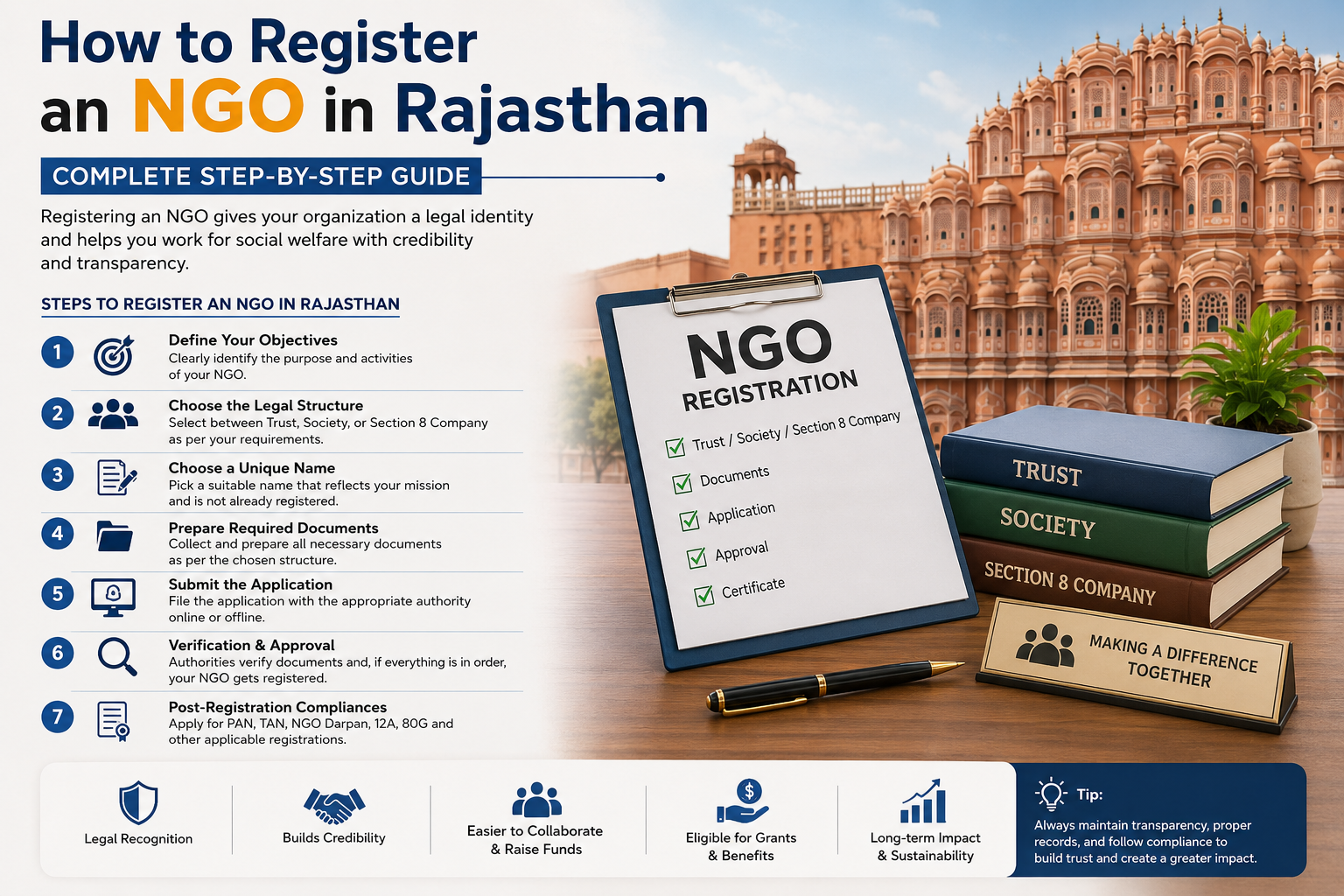
Learn how to register an NGO in Rajasthan, including eligibility, documents, legal structures, registration steps, fees, and key compliance requirements.
What Is an NGO?
An NGO, or Non-Governmental Organization, is an organization established to work toward charitable, social, educational, environmental, or other public welfare objectives.
NGOs can work in areas such as education, healthcare, women and child welfare, rural development, environmental conservation, animal welfare, and poverty alleviation.
Before you register NGO in Rajasthan, you need to decide which legal structure is suitable for your organization.
Types of NGOs You Can Register in Rajasthan
There are three commonly used legal structures for establishing an NGO in India.
1. Trust
A charitable trust is generally established through a trust deed and managed by trustees. It can be suitable for organizations established for charitable or social welfare purposes.
2. Society
A society is generally formed by a group of individuals who come together for charitable, educational, cultural, or social objectives. The registration and compliance requirements depend on the applicable law and state procedures.
3. Section 8 Company
A Section 8 Company is a not-for-profit company incorporated under the Companies Act, 2013. It provides a more formal corporate structure and can be suitable for organizations with structured management and governance requirements.
Choosing the appropriate structure is an important part of the process to register NGO in Rajasthan.
Who Can Register an NGO in Rajasthan?
Individuals or groups intending to undertake charitable or social welfare activities can establish an NGO, provided they meet the requirements applicable to their chosen legal structure.
The requirements can vary depending on whether you establish a trust, society, or Section 8 Company. Before you register NGO in Rajasthan, it is therefore important to understand the membership, trustee, director, and documentation requirements for your selected structure.
An NGO may be established for objectives including:
- Education and skill development
- Healthcare and medical assistance
- Women and child welfare
- Environmental conservation
- Rural development
- Animal welfare
- Poverty alleviation
- Community development
- Cultural activities
Documents Required for NGO Registration
The documents required depend on the legal structure selected. Common documents may include:
- Identity proof of founders, trustees, directors, or members
- Address proof
- Passport-size photographs
- Registered office address proof
- Ownership or authorization documents for the office premises
- Trust deed or incorporation documents
- Memorandum of Association, where applicable
- Rules and regulations, where applicable
- Details of the NGO’s objectives
Having the documents prepared in advance can help simplify the process to register NGO in Rajasthan.
Step-by-Step Process to Register an NGO in Rajasthan
Step 1: Define Your NGO’s Objectives
Start by clearly defining the purpose of your organization. Your objectives should explain the charitable or social activities the NGO intends to undertake.
Step 2: Select the Legal Structure
Choose between a trust, society, or Section 8 Company based on your objectives, founders, management requirements, and expected activities.
Step 3: Select a Suitable Name
Choose a unique and appropriate name for the organization. The proposed name should comply with the applicable registration requirements and should not improperly resemble an existing organization.
Step 4: Prepare the Documents
Prepare the required deed, memorandum, rules and regulations, identification documents, address proofs, and other documents required for the selected structure.
Step 5: Submit the Application
Submit the registration application to the relevant authority or through the applicable online registration system. The procedure varies depending on the type of organization.
Step 6: Verification and Approval
The concerned authority may review the application and supporting documents. Once the requirements are fulfilled, the organization receives the relevant registration certificate or incorporation documents.
Step 7: Complete Additional Registrations
After you register NGO in Rajasthan, additional registrations may be required depending on your activities. These can include PAN, TAN, NGO Darpan registration, 12A, 80G, and other applicable registrations or approvals.
How Much Does NGO Registration Cost in Rajasthan?
The cost to register NGO in Rajasthan depends on the legal structure selected and the services involved in the registration process.
Government charges, stamp duty, documentation expenses, professional fees, and other applicable charges may vary. Trust, society, and Section 8 Company registration can have different cost structures.
It is advisable to understand the complete fee structure before starting the registration process.
What Happens After NGO Registration?
Registration is only the first step toward establishing an NGO. After you register NGO in Rajasthan, you should maintain proper accounts, records, statutory documents, and financial information.
Depending on your activities, you may also need additional registrations or approvals. Organizations intending to receive donations may consider applicable tax registrations such as 12A and 80G, subject to eligibility and prevailing requirements.
If you are based in Jaipur, you can also explore professional assistance for NGO Registration in Jaipur to understand the applicable documentation and registration process.
Why Proper NGO Registration Is Important
Proper registration establishes a recognized legal structure for your organization and defines its objectives, governance, and operating framework.
It can also help an organization maintain formal records, operate through an institutional bank account, apply for relevant registrations, and work with donors, institutions, and other organizations.
However, registering an NGO does not automatically provide every tax exemption or government benefit. Additional registrations may have separate eligibility criteria and application processes.
FAQs About NGO Registration in Rajasthan
1. How can I register NGO in Rajasthan?
You first need to select a suitable structure such as a trust, society, or Section 8 Company. Then prepare the required documents, submit the application to the relevant authority, complete verification, and obtain the applicable registration certificate.
2. Can one person register an NGO in Rajasthan?
The answer depends on the legal structure you choose. Different structures have different requirements regarding founders, trustees, members, or directors. Therefore, determine the structure before starting the registration process.
3. How much does it cost to register an NGO in Rajasthan?
The cost varies depending on whether you choose a trust, society, or Section 8 Company. Government charges, documentation costs, stamp duty, and professional fees may also affect the total cost.
4. How long does NGO registration take in Rajasthan?
The timeline can vary depending on the type of organization, document preparation, application processing, verification, and whether any corrections or additional information are required.
5. What documents are required to register an NGO?
Common documents include identity and address proofs of the founders or members, photographs, registered office documents, and the relevant deed, memorandum, or incorporation documents.
6. Is NGO Darpan registration the same as NGO registration?
No. NGO Darpan registration is separate from establishing the legal entity itself. An organization generally needs to first have an appropriate legal structure before applying for registrations or benefits for which it is eligible.
7. Can an NGO receive donations after registration?
An NGO can receive funds subject to applicable laws and requirements. Tax benefits for donors and tax exemptions for the organization may require separate registrations and eligibility conditions.
8. What is the difference between a trust, society, and Section 8 Company?
They are different legal structures with different formation procedures, governance requirements, compliance obligations, and operating frameworks. The appropriate option depends on the NGO’s objectives and how the founders intend to manage it.
Conclusion
If you want to register NGO in Rajasthan, begin by defining your objectives and selecting the right legal structure. Prepare the required documents, submit the application to the appropriate authority, complete the verification process, and obtain the relevant registration certificate.
After registration, ensure that your organization maintains proper accounts, records, and applicable statutory compliances. Additional registrations such as 12A, 80G, or NGO Darpan may also be relevant depending on your organization’s activities and eligibility.