

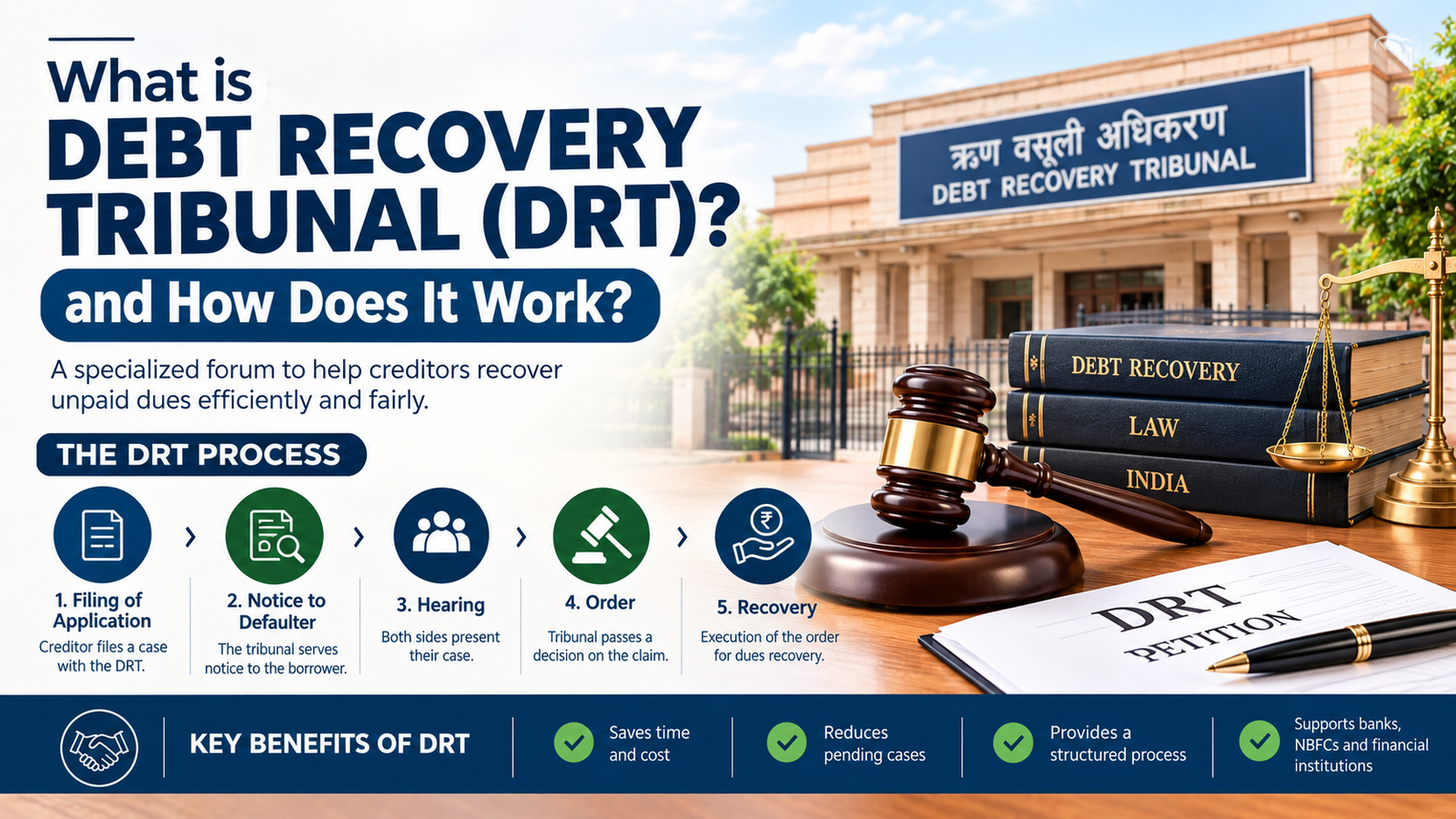
The Debt Recovery Tribunal (DRT) is a specialised legal forum established to handle eligible debt recovery matters involving banks and financial institutions. It provides a structured mechanism for addressing certain financial disputes and recovery claims under the applicable laws in India.
Understanding how the tribunal works can help borrowers, banks, financial institutions, and guarantors understand their rights, responsibilities, and available legal remedies. A Debt Recovery Tribunal matter can involve several stages, including filing an application, responding to notices, presenting documents and arguments, obtaining an order, and pursuing available recovery or appeal remedies.
What is a Debt Recovery Tribunal?
A Debt Recovery Tribunal is a specialised tribunal that deals with eligible applications relating to the recovery of debts due to banks and financial institutions. It was established under the legal framework governing recovery of such debts.
The tribunal provides an alternative specialised forum for eligible recovery matters rather than requiring every such dispute to proceed through an ordinary civil court.
DRT proceedings may involve examination of loan agreements, account statements, repayment records, security documents, notices, correspondence, and other evidence relevant to the dispute.
Why Was DRT Established?
Before the specialised recovery framework was introduced, recovery disputes involving banks and financial institutions could take considerable time through conventional litigation.
The DRT system was developed to provide a dedicated mechanism for eligible debt recovery claims. Its specialised structure allows financial recovery matters to be addressed under the applicable procedural and legal framework.
How Does Debt Recovery Tribunal Work?
The process can vary according to the nature of the case, but a typical DRT matter may involve the following stages:
1. Identification of the Debt
The bank or financial institution reviews the outstanding amount, loan documents, repayment history, and other relevant information.
2. Preparation of the Case
The necessary documents and details are collected to establish the financial claim. The appropriate legal and procedural requirements are also considered.
3. Filing of Application
An eligible applicant may file the appropriate application before the relevant tribunal along with the required documents and prescribed filing requirements.
4. Notice to the Respondent
After the matter proceeds, notice may be issued to the borrower or other concerned respondent. The respondent gets an opportunity to present their response.
5. Submission of Documents and Arguments
The parties may submit written statements, supporting documents, evidence, and legal arguments relevant to the matter.
6. Hearing Before the Tribunal
The tribunal considers the pleadings, documents, evidence, and submissions presented by the parties before making its determination.
7. Order and Recovery
After considering the matter, the tribunal may pass an appropriate order. Where recovery is established, enforcement can proceed through the mechanisms provided under the applicable legal framework.
8. Appeal
Where an appeal is available, an aggrieved party may approach the appropriate appellate forum, subject to the applicable legal conditions.
What Types of Matters Can Involve DRT?
A Debt Recovery Tribunal may deal with eligible recovery matters involving banks and financial institutions. Depending on the circumstances, matters can relate to:
- Business and commercial loans
- Secured lending
- Certain term loans
- Working capital facilities
- Guarantees
- Other eligible financial recovery claims
The applicability of DRT proceedings depends on the facts, amount involved, parties, jurisdiction, and applicable law.
Documents Required for DRT Matters
The documents required depend on the nature of the case and the party involved. Common documents may include:
| Document | Purpose |
|---|---|
| Loan Agreement | Establishes the terms of lending |
| Account Statements | Shows transactions and outstanding dues |
| Demand Notice | Provides details of the recovery claim |
| Security Documents | Establishes collateral or security |
| Mortgage Documents | Relevant for secured property |
| Guarantee Documents | Relevant to guarantor-related claims |
| Payment Receipts | Shows repayments made |
| Bank Correspondence | Provides communication records |
| Identity Documents | Establishes party details |
| Previous Legal Orders | Relevant where earlier proceedings exist |
A document review is important because missing or inconsistent records may affect the preparation of the case.
Advantages of Debt Recovery Tribunal
Specialised Legal Forum
The tribunal is designed specifically for eligible debt recovery matters involving banks and financial institutions.
Structured Proceedings
DRT follows a specialised procedural framework for handling recovery applications and related matters.
Opportunity to Present a Defence
Borrowers and other respondents can present relevant documents, objections, and legal submissions according to the applicable procedure.
Dedicated Recovery Mechanism
The legal framework provides mechanisms for enforcing recovery where a claim has been established.
Legal Remedies
Depending on the circumstances, parties may have access to appropriate legal remedies, including eligible appellate proceedings.
Role of a DRT Lawyer in Jaipur
A DRT Lawyer in Jaipur can help clients understand the legal and procedural aspects of debt recovery matters. Their assistance may include reviewing loan documents, analysing the recovery claim, preparing applications or replies, organising supporting documents, and providing representation before the appropriate tribunal.
For borrowers, a DRT lawyer can assist with reviewing a DRT notice, understanding the lender’s claim, identifying relevant objections, and determining available legal remedies.
For banks and financial institutions, legal assistance may involve preparing recovery applications, reviewing supporting records, handling procedural requirements, and presenting legal submissions.
KB Sharma Legal focuses on personalised assistance based on the facts, documents, and requirements of each DRT matter.
Why Choose KB Sharma Legal?
Debt recovery cases can involve detailed financial records, loan agreements, security documents, procedural requirements, and legal arguments. KB Sharma Legal aims to make the process more organised and easier for clients to understand.
Our approach includes understanding the specific circumstances of the matter, reviewing relevant documents, assisting with case preparation, and providing legal guidance according to the requirements of the case.
FAQs
1. Who can approach the Debt Recovery Tribunal?
Eligible banks and financial institutions may initiate appropriate recovery proceedings. Borrowers and other affected parties may also have specific legal remedies depending on the nature of the proceedings.
2. What documents are required for DRT proceedings?
Common documents include loan agreements, account statements, notices, security documents, mortgage papers, guarantee documents, payment records, correspondence, and previous legal orders where applicable.
3. Can a borrower defend a DRT case?
Yes. A borrower may have an opportunity to respond to the claim and present relevant documents, objections, evidence, and legal submissions according to the applicable procedure.
4. Can a DRT order be appealed?
Depending on the nature of the order and applicable law, an aggrieved party may have a right to approach the appropriate appellate forum subject to prescribed requirements.