

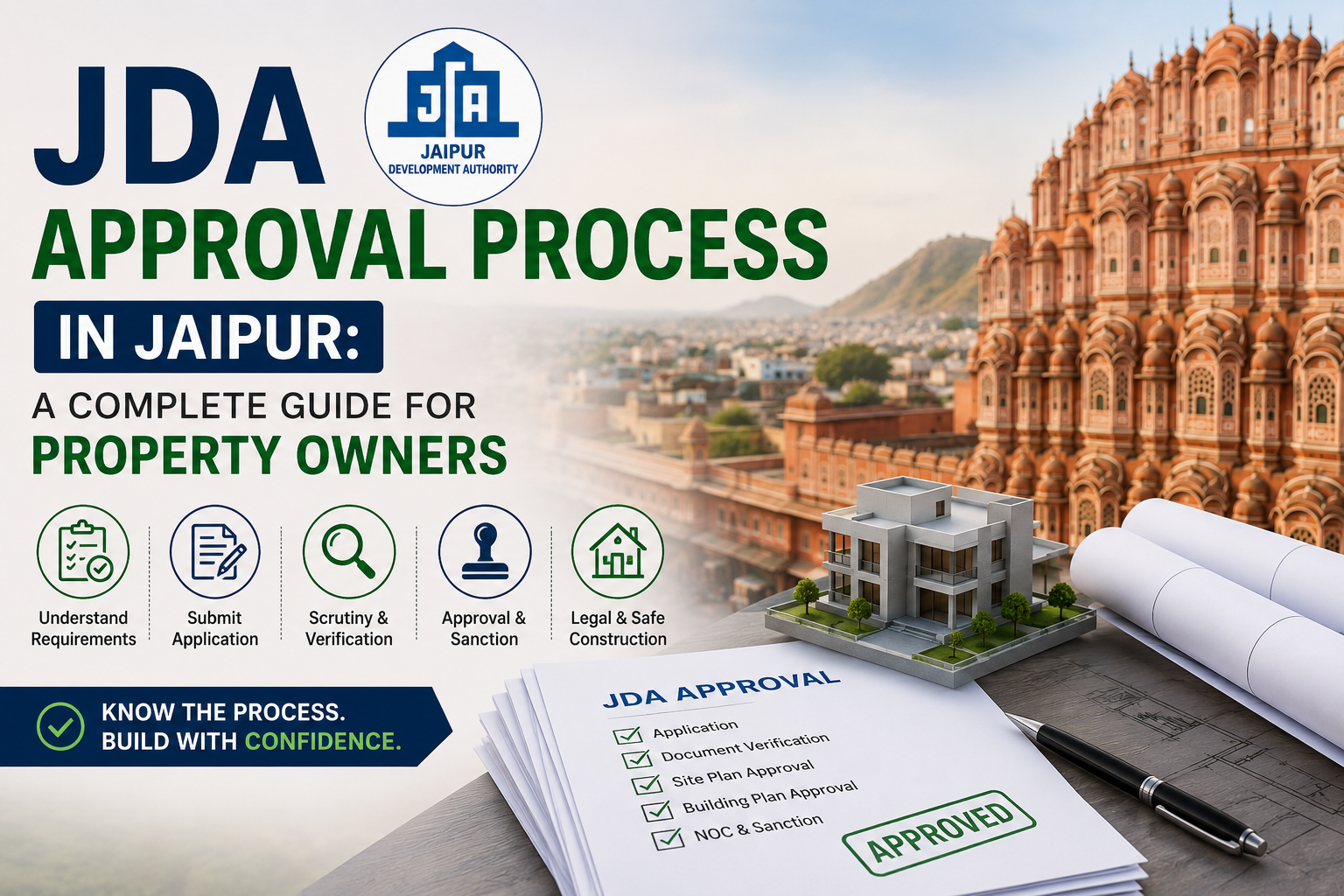
For property owners and developers, JDA Approval is an important part of ensuring that construction, development, and property-related activities comply with applicable planning requirements in Jaipur. The Jaipur Development Authority (JDA) regulates various aspects of urban development, including building plans, land development, layouts, and other property permissions.
Understanding the JDA Approval process can help property owners avoid unnecessary delays, documentation issues, and potential legal complications.
What is JDA Approval?
JDA Approval refers to the permission or approval required from the Jaipur Development Authority for specific property development and construction-related activities. Depending on the nature and location of the property, approval may be required for building plans, layout plans, land development, subdivision, and other activities.
The applicable approval depends on factors such as the property’s location, land use, proposed construction, and applicable development regulations.
Who May Need JDA Approval?
The requirement for JDA Approval can vary according to the type of property and proposed activity. It may be relevant for:
- Residential and commercial property owners
- Property developers and builders
- Individuals constructing or modifying buildings
- Owners developing plots or land
- Developers preparing residential layouts
- Persons seeking permissions for certain property-related changes
Before beginning construction or development, it is advisable to determine which permission or approval applies to the particular property.
JDA Approval Process
The general process for obtaining approval may involve the following steps:
1. Verify Property Details
First, verify the property’s ownership, location, land use, plot details, and applicable planning requirements. This helps determine which approval is required.
2. Prepare the Required Documents
Collect the ownership documents, site plans, building drawings, identification documents, and other records applicable to the proposed development.
3. Prepare the Application
The relevant application and plans are prepared according to the requirements of the concerned authority. For construction-related applications, building plans and other technical documents may be required.
4. Submit the Application
The application and supporting documents are submitted through the applicable JDA process. The documents should be accurate and complete to reduce the possibility of objections or delays.
5. Scrutiny and Verification
The concerned authorities examine the application, plans, property details, and compliance with applicable development regulations. Additional information or corrections may be requested where necessary.
6. Approval or Permission
After the application satisfies the applicable requirements, the relevant approval or permission may be issued. Property owners should carefully review the conditions attached to the approval before proceeding.
Documents Required for JDA Approval
The exact documents depend on the type of approval and property. Commonly required documents may include:
| Document | Purpose |
|---|---|
| Sale Deed/Title Document | Proof of ownership |
| Patta or Lease Documents | Establishes property rights |
| Site Plan | Shows the property and site details |
| Building Plan | Details the proposed construction |
| Property/Plot Details | Identifies the concerned property |
| Identity Proof | Applicant verification |
| Address Proof | Applicant/property-related verification |
| Photographs | Supporting documentation |
| Previous Approvals | Evidence of earlier permissions, if applicable |
| Other NOCs | Required where applicable |
Property owners should confirm the current documentation requirements for their specific application before submission.
Advantages of Obtaining JDA Approval
Obtaining the appropriate approval can provide several benefits:
- Legal compliance: Helps ensure development follows applicable planning requirements.
- Reduced risk: Proper approvals can reduce the possibility of objections and enforcement action.
- Clear documentation: Creates an official record of the approved development.
- Better property transactions: Properly documented properties can be easier to deal with during future transactions.
- Avoid unnecessary delays: Correct documentation and compliance can make the approval process smoother.
- Peace of mind: Property owners can proceed with greater confidence when required permissions are in place.
Common Reasons for Delays in JDA Approval
Applications may face delays because of incomplete documents, discrepancies in ownership records, incorrect plans, land-use issues, missing permissions, or failure to address objections raised during scrutiny.
Therefore, checking the documentation and applicable requirements before filing can be extremely useful.
JDA Lawyer in Jaipur
A JDA Lawyer in Jaipur can assist property owners, builders, and developers with legal issues connected with JDA permissions and property matters. Professional assistance can be particularly useful where the property involves disputed ownership, notices, documentation problems, objections, unauthorized construction issues, or other legal complications.
At KB Sharma Legal, we provide personalised legal assistance for JDA-related property matters. Our approach focuses on understanding the client’s property situation, reviewing relevant documents, explaining the applicable legal requirements, and assisting with the appropriate legal process.
Whether you need assistance with JDA Approval, property documentation, JDA notices, or a property-related dispute, professional legal guidance can help you understand your options and proceed with greater clarity.
FAQs About JDA Approval
1. What is JDA Approval?
JDA Approval is permission or authorisation from the Jaipur Development Authority for applicable construction, development, layout, or property-related activities. The exact requirement depends on the property and proposed activity.
2. Is JDA Approval required for every property?
Not necessarily. The requirement depends on the property’s location, land use, type of development, construction activity, and applicable regulations. Property owners should verify the specific requirements before starting development.
3. What documents are generally required for JDA Approval?
Common documents include ownership papers, patta or lease documents, site plans, building plans, identity proof, property details, and applicable NOCs. Additional documents may be required depending on the application.
4. Can a JDA Lawyer in Jaipur help with property approval issues?
Yes. A lawyer can review property documents, identify legal issues, assist with JDA-related notices or objections, and provide guidance on the appropriate legal process for the matter.