

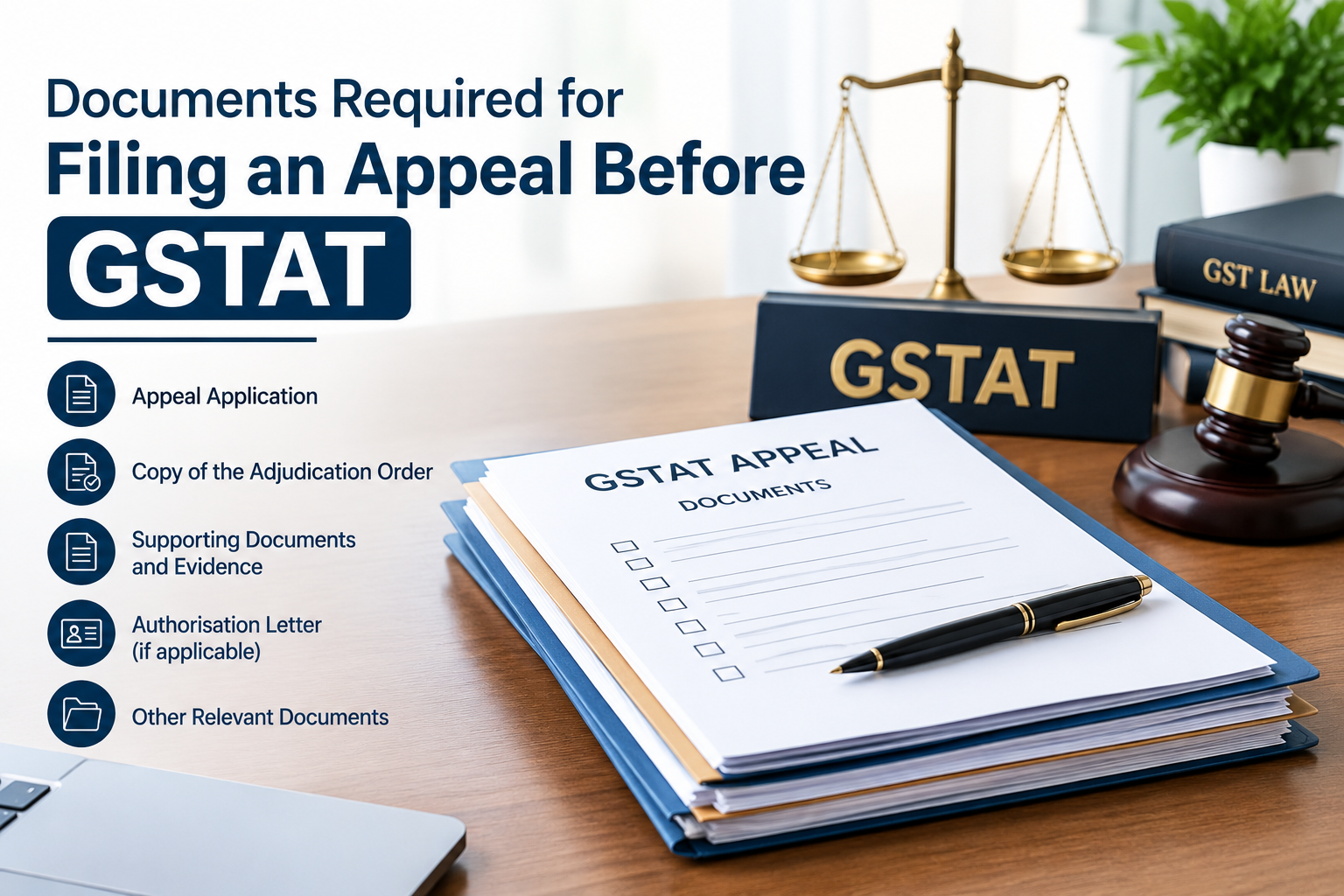
When a taxpayer is dissatisfied with a GST order, Filing an Appeal before the GST Appellate Tribunal (GSTAT) can be an important legal remedy. However, Filing an Appeal requires proper documentation, accurate information, and compliance with the applicable procedural requirements. Keeping the required documents ready can help avoid delays and ensure that the case is presented effectively.
What Is GSTAT?
The Goods and Services Tax Appellate Tribunal (GSTAT) is an appellate forum for resolving disputes arising under GST laws. Taxpayers may approach the tribunal against eligible orders passed by the relevant appellate authorities or other prescribed authorities.
Before Filing an Appeal, taxpayers should carefully review the disputed order, applicable time limits, grounds of appeal, and supporting evidence.
Documents Required for Filing an Appeal
The exact documents may vary depending on the nature of the dispute and the applicable procedural requirements. Generally, the following documents may be required for Filing an Appeal:
| Document | Purpose |
|---|---|
| Copy of the GST Order | Shows the decision being challenged |
| Order-in-Appeal | Relevant where the matter has already gone through an appellate authority |
| Statement of Facts | Explains the factual background of the dispute |
| Grounds of Appeal | Specifies the legal and factual grounds for challenging the order |
| GST Registration Certificate | Establishes the taxpayer’s GST registration details |
| Relevant GST Returns | Supports the taxpayer’s position regarding GST compliance |
| Tax Invoices | Helps establish transactions, tax liability, or input tax credit claims |
| Payment Challans | Provides evidence of tax, interest, or penalty payments |
| Supporting Correspondence | Includes relevant communications with GST authorities |
| Evidence and Supporting Records | Helps substantiate the claims made in the appeal |
| Authorization Documents | Required where a lawyer or authorized representative acts on behalf of the taxpayer |
Copy of the GST Order
A clear copy of the order being challenged is one of the most important documents for Filing an Appeal. It allows the tribunal and legal representative to understand the findings, tax demand, interest, penalty, or other consequences imposed on the taxpayer.
If an earlier appeal has already been decided, the relevant appellate order should also be included.
Statement of Facts and Grounds of Appeal
The statement of facts provides a concise explanation of the events leading to the dispute. The grounds of appeal explain why the taxpayer believes the order is incorrect or legally unsustainable.
During Filing an Appeal, these documents should be prepared carefully because they form an important part of the taxpayer’s case. Supporting facts should be consistent with the documents and records submitted with the appeal.
GST Returns and Financial Records
Relevant GST returns can be useful when Filing an Appeal involving tax liability, input tax credit, turnover, classification, or other GST-related issues.
Depending on the dispute, supporting records may include GSTR-1, GSTR-3B, annual returns, reconciliation statements, purchase records, sales records, and other relevant financial documents.
Tax Invoices and Input Tax Credit Records
Where the dispute concerns input tax credit, taxpayers should keep relevant purchase invoices, supplier details, payment records, reconciliation statements, and other supporting evidence.
These documents can help demonstrate the underlying transactions and support the taxpayer’s position during Filing an Appeal.
Payment Challans and Demand Details
If the taxpayer has already paid any amount towards tax, interest, penalty, or other dues, the corresponding payment challans should be preserved.
Details of the disputed demand and payments made may be relevant during Filing an Appeal, particularly where statutory pre-deposit or other payment-related requirements apply.
Authorization and Representation Documents
A taxpayer may require authorization documents when appointing a GSTAT lawyer in Jaipur or another eligible authorized representative. Proper authorization helps establish the representative’s authority to act for the taxpayer.
Professional assistance can also be useful when Filing an Appeal because GST disputes may involve technical facts, legal provisions, documentation, and procedural requirements.
Additional Documents That May Be Required
Depending on the nature of the GST dispute, additional records may be necessary. These can include:
- E-way bills and e-invoice records
- Bank statements relevant to the transaction
- Contracts and purchase orders
- Ledger accounts
- Reconciliation statements
- Correspondence with GST authorities
- Previous notices and replies
- Audit or assessment-related documents
- Evidence supporting exemption or classification claims
Before Filing an Appeal, it is advisable to organize these records chronologically and ensure that the information is consistent across documents.
How to Prepare for Filing an Appeal
Proper preparation can make Filing an Appeal more organized and effective. The taxpayer should first identify the disputed issues and review the relevant GST order. Next, all supporting documents should be collected and checked for accuracy.
The grounds of appeal should clearly address the findings being challenged. Any applicable payment or pre-deposit requirements and prescribed timelines should also be considered before Filing an Appeal.
Why Professional Assistance Can Help
GSTAT matters can involve complex legal and technical questions. A professional can assist with reviewing the order, identifying possible grounds of challenge, organizing documents, preparing the appeal, and representing the taxpayer where appropriate.
KB Sharma Legal can assist businesses and taxpayers with GST-related disputes, documentation, appeal preparation, and legal representation. With personalised assistance, taxpayers can approach Filing an Appeal with better clarity and a more organized set of documents.
Conclusion
Having the right documents is an important part of Filing an Appeal before GSTAT. A complete copy of the disputed order, statement of facts, grounds of appeal, GST records, invoices, payment evidence, and supporting documents can help establish the taxpayer’s case.
Since documentation requirements can differ according to the nature of the dispute, taxpayers should review their individual circumstances carefully before Filing an Appeal. Professional guidance can also help ensure that the relevant records and legal grounds are properly presented.
FAQs
1. What is the most important document for Filing an Appeal before GSTAT?
The GST order being challenged is generally a key document. Depending on the case, the relevant appellate order, statement of facts, grounds of appeal, GST records, and supporting evidence may also be required.
2. Are GST returns required for Filing an Appeal?
Relevant GST returns may be required when they support the taxpayer’s position. Returns such as GSTR-1, GSTR-3B, and other records may be useful depending on the nature of the dispute.
3. Can a lawyer help with Filing an Appeal before GSTAT?
Yes. A qualified professional can assist with reviewing the order, preparing grounds, organizing documents, complying with procedural requirements, and representing the taxpayer where permitted.
4. Can additional documents be submitted during the appeal?
Additional evidence may be subject to the applicable procedural rules and the tribunal’s directions. Therefore, taxpayers should identify and organize all relevant documents as early as possible before Filing an Appeal.