

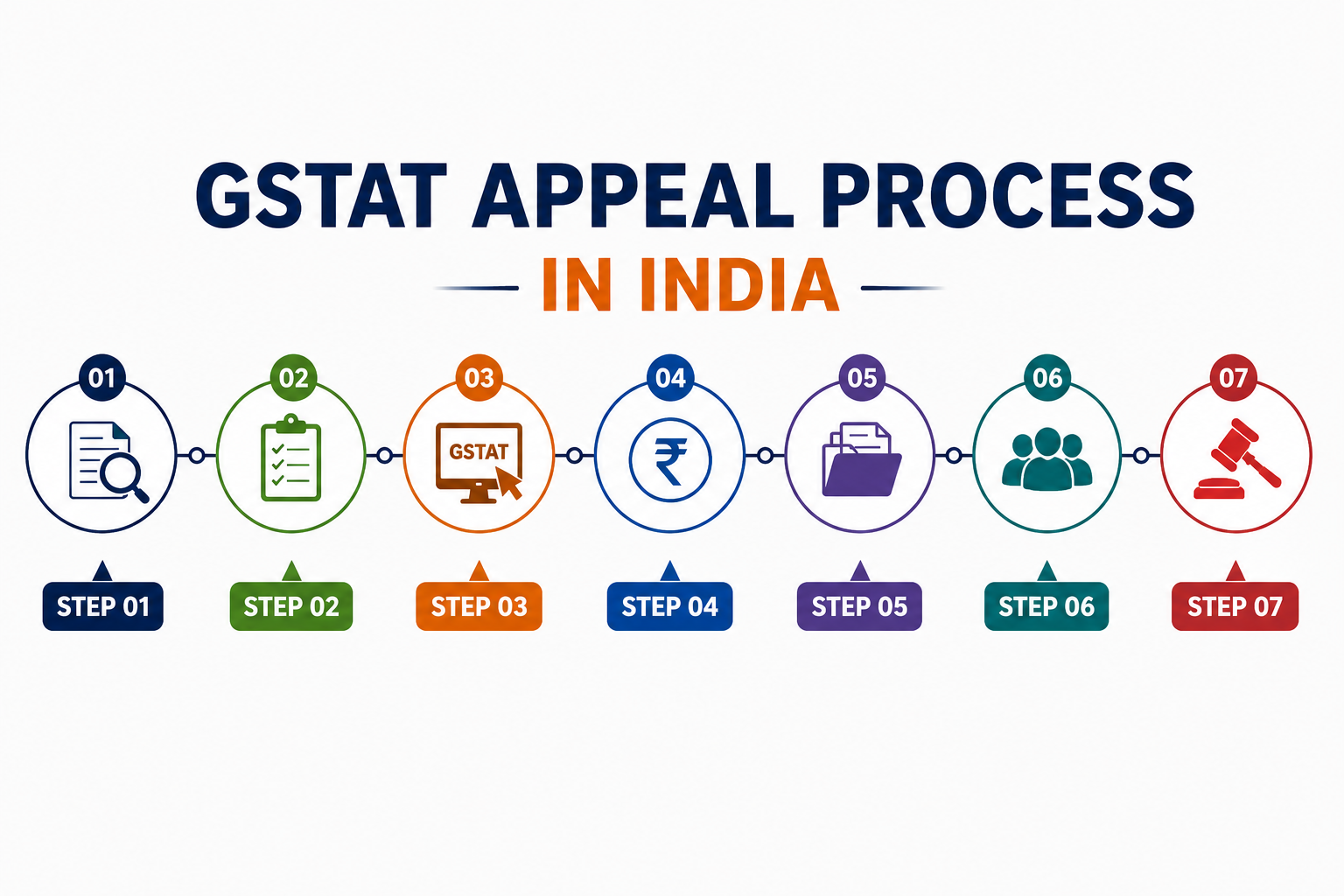
The GSTAT Appeal Process provides taxpayers with a legal mechanism to challenge certain orders passed under the Goods and Services Tax (GST) framework. The Goods and Services Tax Appellate Tribunal (GSTAT) serves as an important appellate forum for resolving GST-related disputes.
When a taxpayer disagrees with an eligible GST order, understanding the GSTAT Appeal Process can help in taking the appropriate legal steps within the applicable time limit. Professional assistance can also make the appeal process more organised and help taxpayers present their case effectively.
What is GSTAT?
The Goods and Services Tax Appellate Tribunal, commonly known as GSTAT, is an appellate authority established to hear and decide specified GST disputes. It provides taxpayers and other eligible parties with an opportunity to challenge certain decisions of GST appellate authorities.
The tribunal deals with matters involving issues such as tax demands, input tax credit, penalties, classification and other GST-related disputes, subject to its jurisdiction.
When Can You File a GSTAT Appeal?
A taxpayer may consider filing an appeal before GSTAT when they are aggrieved by an order that is appealable under the applicable GST provisions.
Common situations may include:
- Disagreement with a GST appellate order
- Disputes relating to tax liability
- Input Tax Credit disputes
- Penalty or interest-related matters
- Classification or valuation disputes
- Certain refund-related disputes
- Other eligible GST matters covered by the appellate provisions
Before filing, it is important to determine whether the particular order is appealable before GSTAT and whether the applicable limitation period has been complied with.
GSTAT Appeal Process: Step-by-Step
Understanding the GSTAT Appeal Process is important because an appeal involves several procedural and documentation requirements.
1. Review the GST Order
The first step is to carefully examine the order being challenged. The taxpayer should identify the disputed findings, tax demand, penalty, interest or other issues involved.
2. Determine the Grounds of Appeal
The appellant needs to establish clear grounds explaining why the order should be modified, cancelled or otherwise challenged. Supporting facts and relevant legal provisions should be properly presented.
3. Prepare Required Documents
All relevant orders, notices, statements, returns and supporting evidence should be collected before preparing the appeal.
4. File the Appeal
The appeal must be filed through the prescribed procedure and within the applicable limitation period. The prescribed requirements, forms and fees should be checked before submission.
5. Tribunal Proceedings
After filing, the matter may proceed through notices, submissions and hearings. Both sides may get an opportunity to present their arguments and supporting documents.
6. Final Order
After considering the submissions and material available on record, GSTAT may pass an appropriate order according to the facts and applicable law.
Note: Applicable forms, limitation periods, fees and procedural requirements can depend on the nature and date of the order. These should be verified for the specific case before filing.
Documents Required for GSTAT Appeal
The documents required can vary depending on the dispute. Generally, an appellant may need:
| Document | Purpose |
|---|---|
| GST order being challenged | Main document for the appeal |
| Previous appeal order | Establishes the appellate history |
| GST notices | Provides background of the dispute |
| GST registration details | Identifies the taxpayer |
| GST returns | Supports tax and transaction-related facts |
| Invoices and financial records | Provides transaction evidence |
| Input Tax Credit records | Relevant for ITC disputes |
| Reply/submissions filed earlier | Shows the taxpayer’s previous position |
| Supporting evidence | Helps establish the grounds of appeal |
| Authorisation documents | Required where representation is through an authorised person |
Advantages of Filing an Appeal Before GSTAT
The GSTAT Appeal Process provides an important legal avenue for taxpayers who wish to challenge eligible GST orders.
Opportunity to Challenge an Adverse Order
Taxpayers can present their legal and factual objections before the appropriate appellate forum.
Structured Dispute Resolution
GSTAT provides a specialised forum for eligible GST disputes, allowing the matter to be examined through an appellate process.
Protection of Legal Rights
Filing an appropriate appeal allows taxpayers to exercise their statutory right to challenge an unfavourable decision.
Professional Representation
A tax professional or lawyer can assist with preparing grounds, organising documents and presenting arguments during proceedings.
GSTAT Lawyer in Jaipur
Businesses and taxpayers dealing with GST disputes may benefit from professional assistance throughout the GSTAT Appeal Process. A GSTAT Lawyer in Jaipur can help analyse the disputed order, identify appropriate grounds of appeal and organise the necessary documentation.
At KB Sharma Legal, assistance can include reviewing GST orders, preparing appeal-related documentation, developing legal submissions and providing representation support for eligible GST disputes.
Professional guidance can be particularly useful when the matter involves substantial tax demands, complex input tax credit issues, penalties or questions requiring detailed interpretation of GST provisions.
Choosing experienced assistance can make the GSTAT Appeal Process more organised and help ensure that important procedural requirements are not overlooked.
Frequently Asked Questions
1. What is the GSTAT Appeal Process?
The GSTAT Appeal Process is the procedure through which an eligible taxpayer or other aggrieved party challenges an appealable GST order before the Goods and Services Tax Appellate Tribunal.
2. Who can file an appeal before GSTAT?
A person or entity aggrieved by an order that is appealable under the applicable GST provisions may be able to file an appeal before GSTAT, subject to the prescribed conditions and limitation period.
3. What documents are required for a GSTAT appeal?
Documents generally include the disputed GST order, previous appellate orders, notices, GST returns, invoices, ITC records, earlier submissions and other evidence relevant to the dispute.
4. Can a lawyer help with a GSTAT appeal?
Yes. A GSTAT Lawyer can assist with reviewing the order, identifying grounds of appeal, preparing documents and submissions, and providing representation or legal assistance during the proceedings, as applicable.
Conclusion
The GSTAT Appeal Process gives eligible taxpayers an important opportunity to challenge GST orders through the appropriate appellate mechanism. Since GST appeals involve specific procedural requirements, limitation periods and supporting documentation, careful preparation is essential.
For taxpayers and businesses in Rajasthan, seeking assistance from a GSTAT Lawyer in Jaipur can help make the appeal process more structured and legally focused.